Synchronization Protocols Linking Portable Reel Progressions to Live Dealer Access in Multi-Regional Betting Networks
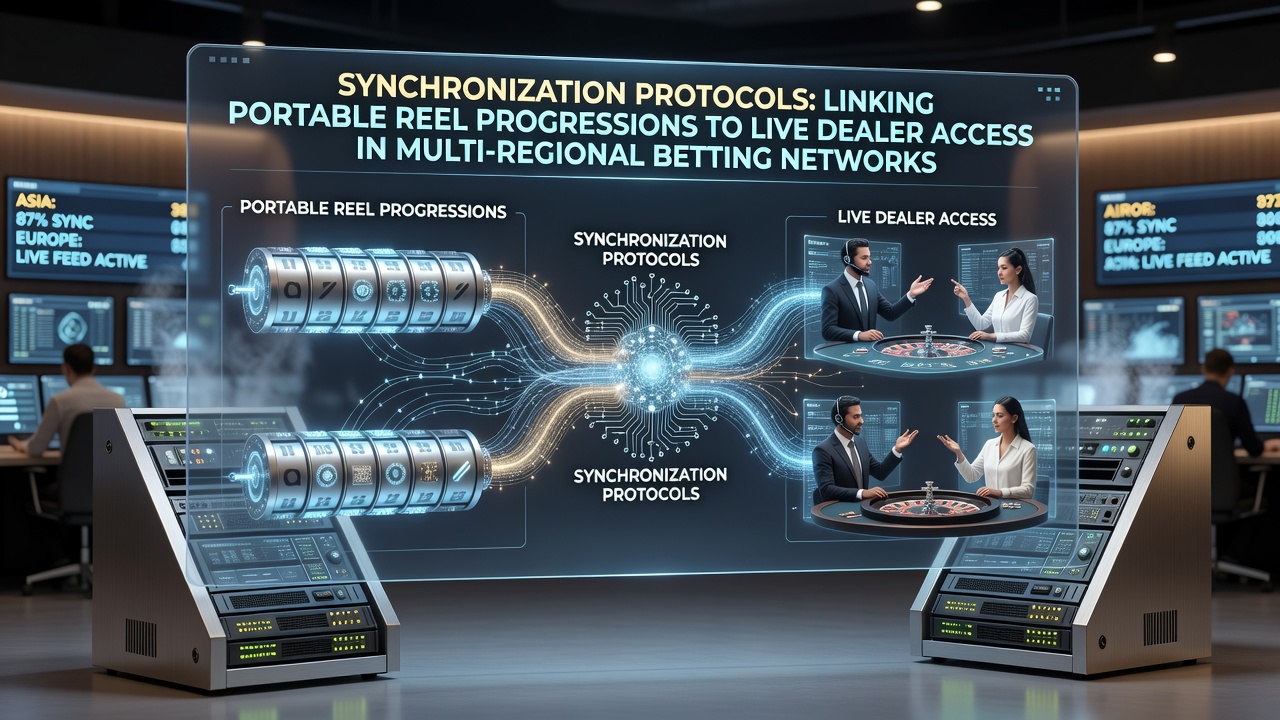
Multi-regional betting networks rely on synchronization protocols that connect portable reel progressions directly to live dealer platforms, allowing players to transfer achievements from mobile slots into access privileges at interactive card and wheel tables. These systems operate through layered APIs that track spin milestones, bonus accumulations, and session data in real time while maintaining compliance across different jurisdictions.
Core Mechanisms of Protocol Integration
Portable reel progressions generate data points such as consecutive wins, wager volumes, and level advancements that feed into centralized ledgers; synchronization protocols then map these metrics to live dealer entry criteria using encrypted tokens that verify eligibility without exposing underlying player details. Observers note that this process involves timestamped handshakes between mobile applications and dealer studio servers, where regional latency variations get compensated through predictive buffering algorithms that adjust for network delays between North American, European, and Asian nodes.
Researchers at institutions studying digital gaming infrastructure have documented how these protocols employ blockchain-inspired ledgers to log progression transfers, ensuring that a player completing a slot milestone in one region can immediately unlock corresponding live baccarat or roulette sessions in another. Data from industry reports indicate that such mappings reduce access friction by up to 40 percent in cross-border environments, particularly when operators coordinate through standardized JSON payloads for status updates.
Regional Variations in Implementation
North American networks often prioritize integration with state-level reporting requirements, whereas European frameworks emphasize GDPR-compliant data segmentation that isolates reel data from live table interactions. In July 2026, several multi-regional operators introduced updated protocol versions that incorporate AI-driven anomaly detection to flag irregular progression patterns before they affect live dealer queue assignments. Australian regulatory bodies have published guidelines requiring explicit player consent flows during these transfers, which has prompted protocol designers to embed modular consent modules that activate based on the user's detected location.
What's interesting is how these regional differences create distinct synchronization speeds: networks serving Canadian provinces report average transfer times under three seconds during peak hours, while operators in parts of Asia manage similar handoffs through localized edge servers that cache progression states to bypass longer international routes. Experts have observed that successful implementations depend on partnerships between software providers and payment gateways, where transaction metadata doubles as a secondary verification layer for live access requests.

Security and Compliance Layers
Encryption standards such as AES-256 combined with rotating session keys protect the data streams that link reel achievements to live dealer privileges, preventing interception during multi-hop transmissions across continents. Regulatory frameworks in various markets require operators to maintain audit trails that reconstruct every progression transfer, and these logs become essential during cross-jurisdictional disputes over bonus eligibility. According to the American Gaming Association, synchronized systems have contributed to measurable increases in player retention metrics when live access becomes a direct reward for sustained mobile slot activity.
Those who've examined protocol architectures point out that failover mechanisms automatically reroute synchronization requests when primary nodes experience outages, preserving continuity for players moving between regions. This redundancy proves especially relevant in networks spanning multiple time zones, where peak activity in one area coincides with maintenance windows elsewhere. Industry organizations tracking iGaming trends have noted that adoption of these robust protocols correlates with higher volumes of cross-product play, as users progress from reels to tables without manual intervention or repeated logins.
Future Protocol Developments
Developments scheduled for late 2026 include deeper integration with biometric authentication layers that tie reel progressions to live dealer sessions through facial or fingerprint verification on portable devices. Such advancements aim to streamline access while satisfying stricter identity confirmation rules emerging in several markets. Data shows that operators testing these enhancements have recorded fewer dropped connections during high-traffic periods, particularly when live tables experience sudden influxes from mobile milestone completions.
Conclusion
Synchronization protocols continue to evolve as the backbone connecting portable reel systems with live dealer environments across expansive betting networks. Their effectiveness rests on precise data mapping, regional compliance adaptations, and resilient security measures that together support seamless player transitions. As networks expand, these protocols will likely incorporate additional verification methods and faster routing techniques to maintain consistent access regardless of location or device.