Payment Pathways Enabling Cross-Game Rewards from Mobile Reels to Dealer-Run Variants in Tiered Player Clubs
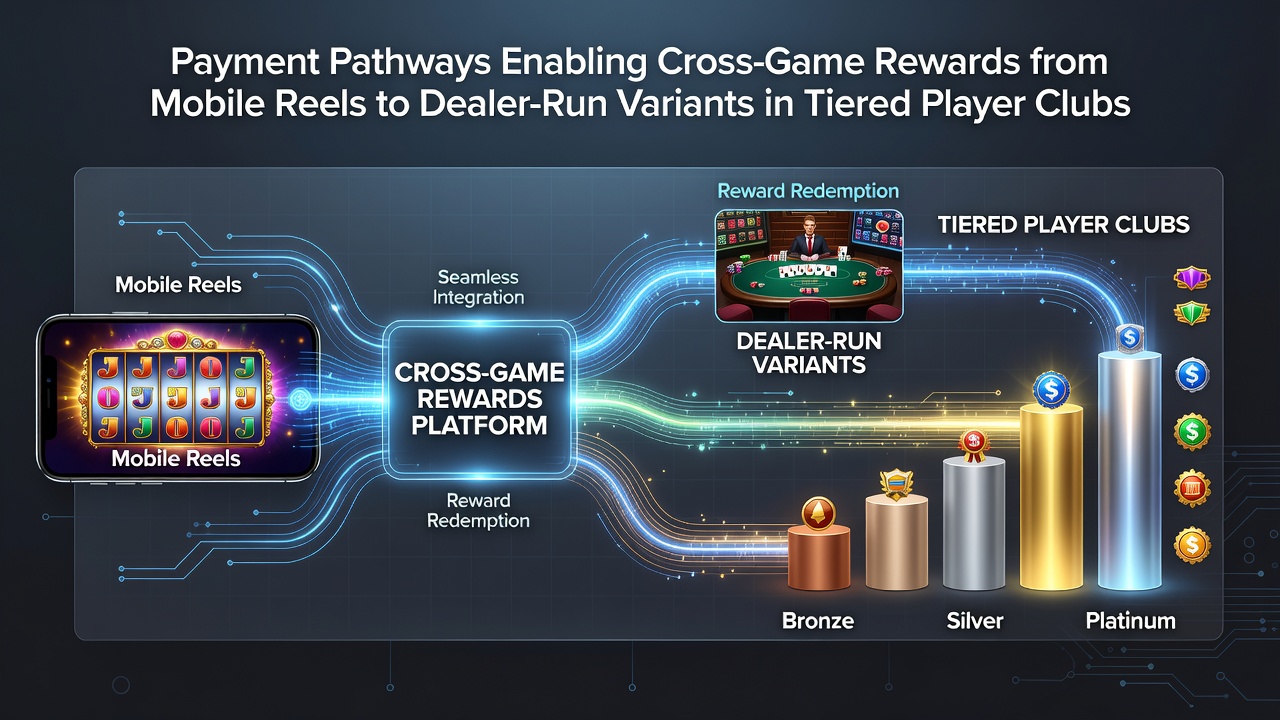
Payment systems now route rewards earned on mobile reels directly into access privileges for dealer-run variants, and this integration operates through structured player clubs that assign tiers based on accumulated activity. Data from industry reports show that operators link slot milestones to live table entries via specific transaction methods, while tiered frameworks determine the speed and scope of those transfers. As of June 2026 several platforms have updated their verification sequences to shorten the interval between reel-based progress and live game unlocks.
Mechanics of Reward Generation on Mobile Reels
Mobile reel games accumulate points through standard spin outcomes, adn those points feed into club accounts that track player status across multiple titles. Operators record each session in centralized ledgers that update in real time, and the resulting balances become eligible for conversion once thresholds are met. Payment processors handle the conversion step by confirming account ownership before releasing the corresponding live-game credit, and this confirmation relies on the same authentication protocols used for initial deposits.
Role of Tiered Player Clubs in Cross-Game Transfers
Tiered clubs segment users into levels that dictate reward velocity, with higher tiers receiving faster routing from reel earnings to live dealer privileges. Club algorithms calculate eligibility by combining total handle, frequency of play, and chosen payment instruments, and the resulting tier status determines whether a player can apply slot points toward blackjack, roulette, or baccarat sessions. Observers note that mid-tier members often see same-day transfers, whereas entry-level accounts encounter additional verification layers that extend processing by twenty-four to forty-eight hours.
Payment Instruments That Facilitate Seamless Routing
E-wallets and instant bank transfers dominate the pathways because they support rapid balance confirmation across game categories, and many platforms now embed these methods within the club interface itself. Cryptocurrency options appear in select markets where regulatory frameworks permit their use for both deposits and reward redemptions, while traditional card networks continue to serve regions that require legacy rails for compliance. Each instrument carries distinct fee structures and settlement times, yet all must interface with the club’s tier engine to release cross-game credits.
Integration Between Mobile Reels and Dealer-Run Variants
Once a player reaches a defined reel milestone, the system generates a tokenized reward that the chosen payment method redeems against live table buy-ins. Dealer-run variants accept these tokens only after the club platform confirms tier status and payment authenticity, and the confirmation step prevents duplicate claims across devices. Studies from gaming research centers indicate that platforms using unified payment ledgers reduce friction by approximately thirty percent compared with fragmented systems.

Live dealer interfaces display available cross-game credits in real time, and players select the credit source before the dealer session begins. The same payment rails that funded the original reel play often complete the final authorization, creating a closed loop that maintains audit trails required by oversight bodies.
Regulatory Context in Mid-2026 Markets
According to figures released by the American Gaming Association, several North American jurisdictions updated digital payment rules in early 2026 to accommodate faster reward portability between game types. Canadian provincial regulators have similarly aligned verification standards so that mobile-to-live transfers meet the same anti-money-laundering thresholds applied to direct deposits. These alignments allow operators to maintain consistent tier logic across borders while still satisfying local reporting obligations.
Operational Examples Observed in Current Platforms
One documented case involves a tier-three player who converted reel points earned over a weekend into live roulette entry credits within four hours using an e-wallet linked to the club account. Another instance tracked through industry analytics showed a lower-tier account requiring manual document upload before the same conversion completed, illustrating how tier level directly modulates payment speed. Researchers at the University of Nevada, Las Vegas have compiled transaction logs demonstrating that platforms employing automated tier checks experience fewer disputes over reward eligibility.
Conclusion
Payment pathways now serve as the connective tissue between mobile reel progress and dealer-run access inside tiered clubs, and the efficiency of those pathways continues to depend on the chosen instruments and the player’s assigned level. Data through June 2026 confirm that unified ledgers and updated regulatory standards have shortened transfer times in multiple markets, while authentication requirements remain the primary variable affecting individual experiences. Operators that align payment processing with club tier logic enable the cross-game reward flows that define current mobile-to-live ecosystems.