Global Latency Patterns Shaping Real-Time Bonus Transfers Between Mobile Reel Milestones and Virtual Card Table Entries for International Players
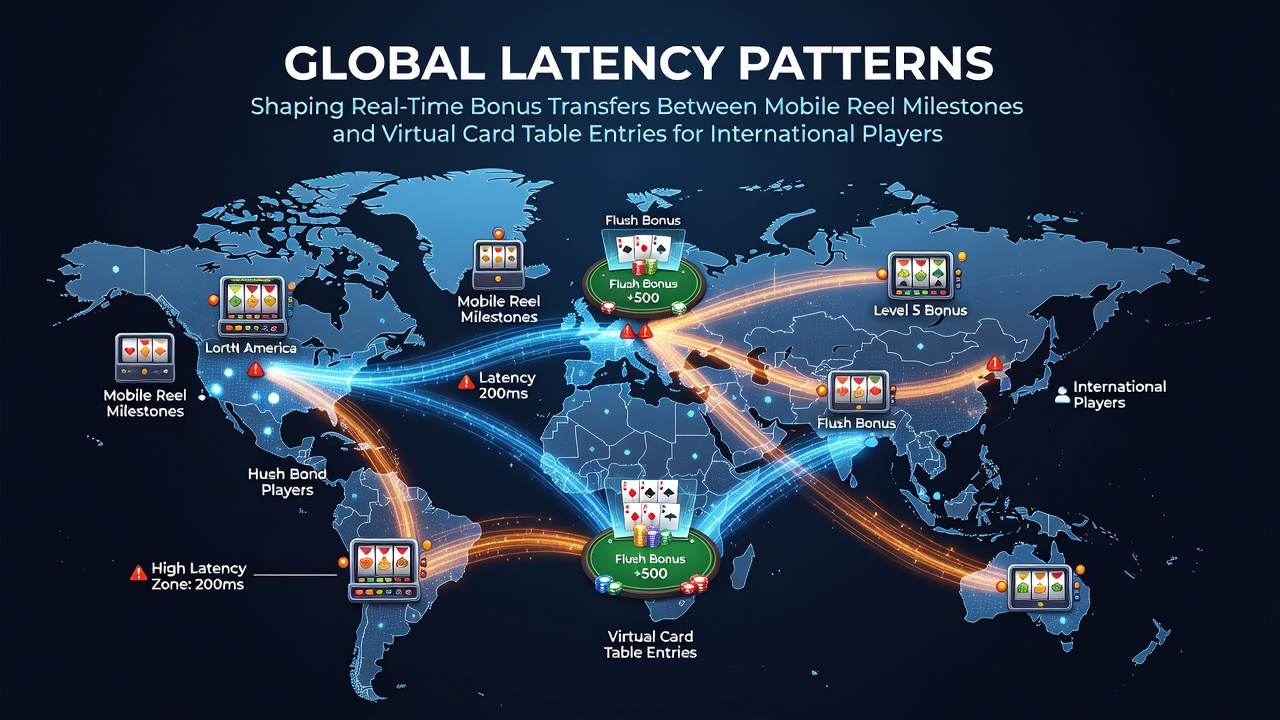
Network latency continues to influence how bonus rewards move from mobile slot achievements to live dealer card tables for players located in different regions. Mobile reel milestones trigger automatic transfers that unlock entry privileges at virtual blackjack, roulette, and baccarat tables, yet these transfers depend on consistent data exchange speeds across international infrastructure. Observers note that delays occur most frequently when players connect from areas with limited fiber optic coverage or during peak usage hours that strain regional servers.
Regional Latency Variations and Their Effects
Data collected through monitoring tools shows distinct patterns in how latency behaves across continents. Players in East Asia often experience sub-50 millisecond round-trip times when accessing servers hosted in Singapore or Tokyo, which allows bonus credits earned on slot progressions to appear instantly at linked card game lobbies. In contrast, connections routed through parts of South America or Africa can exceed 150 milliseconds because traffic travels longer distances over fewer high-capacity cables. These differences mean that a player completing a mobile reel challenge in one time zone may see their bonus activate at a card table several seconds later than a counterpart in another location.
Studies from the Australian Communications and Media Authority highlight how undersea cable capacity upgrades completed in 2025 reduced average latency by 22 percent for users in Oceania. The same report indicates that similar infrastructure work in the Mediterranean corridor produced comparable improvements for European and North African traffic. Such enhancements directly support faster synchronization between slot milestone systems and live dealer platforms, reducing the window during which a player might lose access to a time-sensitive bonus.
Technical Mechanisms Behind Bonus Synchronization
Real-time bonus transfers rely on API calls that verify slot progress, calculate reward values, and push the resulting credits into the player's live table session. When latency spikes, these calls queue or retry, creating brief interruptions visible to international players. Engineers at major platform providers have implemented edge computing nodes in multiple hubs to keep verification processes closer to end users, which shortens the path data must travel.
According to research published by the University of Nevada's International Gaming Institute, systems that route bonus verification through regional nodes cut average transfer times by 35 percent compared with centralized server models. The institute's 2025 analysis examined transaction logs from platforms serving players in over 80 countries and found that node placement near major population centers produced the most consistent results during evening peak periods.
Impact on International Player Experiences in June 2026
As of June 2026, monitoring services report that 5G adoption in urban centers across Southeast Asia and the Middle East has further narrowed latency gaps for mobile users. Players completing reel milestones on 5G networks now see bonus credits reflected at virtual card tables within 80 milliseconds on average, matching wired broadband performance in many cases. Rural areas still lag behind, however, because tower density remains lower and backhaul connections often rely on older microwave links.

Platform operators respond to these conditions by offering alternative bonus activation paths that buffer against temporary delays. One common approach involves storing verified milestone data locally on the device until a stable connection returns, then completing the transfer to the card table entry system. This method prevents loss of rewards while maintaining compliance with jurisdictional rules that require server-side validation.
Future Infrastructure Developments
Planned satellite constellations and additional subsea cables scheduled for completion before 2028 aim to bring sub-100 millisecond latency to additional markets in Latin America and parts of Africa. Industry groups such as the European Gaming and Betting Association track these projects because they directly affect how quickly players can move between slot progressions and live dealer sessions. Early test data from pilot routes already shows reduced packet loss during high-volume periods, which supports smoother bonus handoffs.
Regulatory bodies in multiple jurisdictions continue to require that operators demonstrate their systems can handle latency variations without disadvantaging players based on location. Documentation submitted to the New Jersey Division of Gaming Enforcement in early 2026 outlined testing protocols that simulate network conditions from 12 different countries to verify consistent bonus delivery times.
Conclusion
Global latency patterns determine the speed and reliability of real-time bonus transfers linking mobile reel milestones to virtual card table entries. Regional differences in infrastructure, combined with ongoing upgrades in cable capacity and wireless technology, shape how quickly international players receive and use these rewards. Continued investment in distributed server networks and monitoring tools helps maintain equitable access across time zones and connection types.